Our Family Verdict
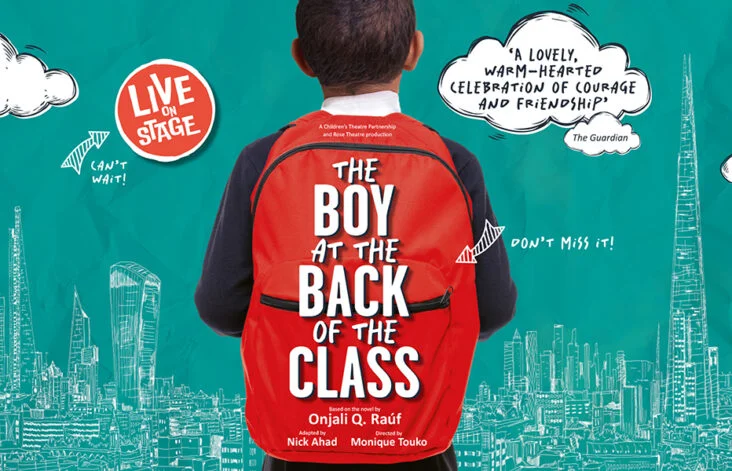
The Boy at the Back of the Class is an award-winning book that tells the story of a 9-year-old refugee.
Forced to flee his home in Syria, with his sister, parents and cat, Ahmet arrives alone in the UK. Where are his parents? What is his story?
Written by Onjali Q. Raúf, adapted for a live audience by Nick Ahad and directed by Monique Touko, this is one of the most powerful pieces of theatre I have ever seen.
The heart wrenching story is told from a child’s perspective and is largely narrated by 9-year-old Alexa. She is an inquisitive and brave girl, who believes that kindness is the most powerful tool in the world.
After learning that Ahmet has fled his war torn country and doesn’t know where his parents are, Alexa and her school friends come up with a royal plan to reunite him with his family.
I loved the bravery and determination of a young girl who plans to march right up to the Queen in order to be listened to.
Courage, friendship, kindness and standing up for what is right, are just some of the main themes that run through this play, making it perfect for younger audiences, despite the difficult subjects.
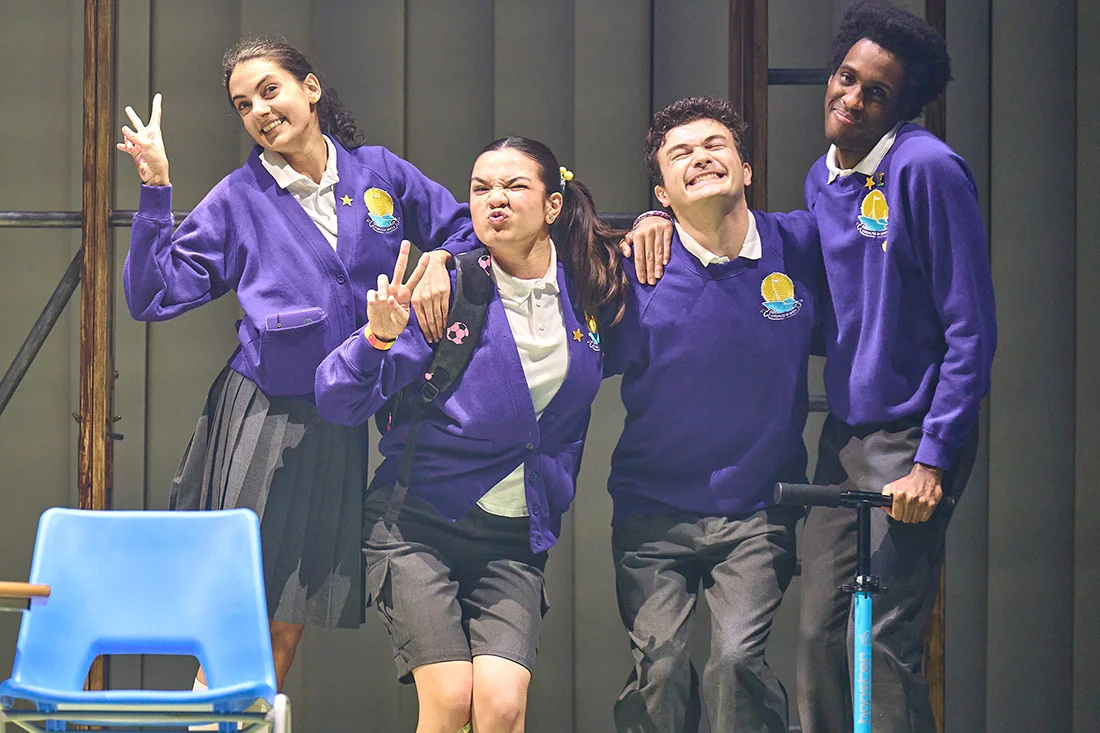
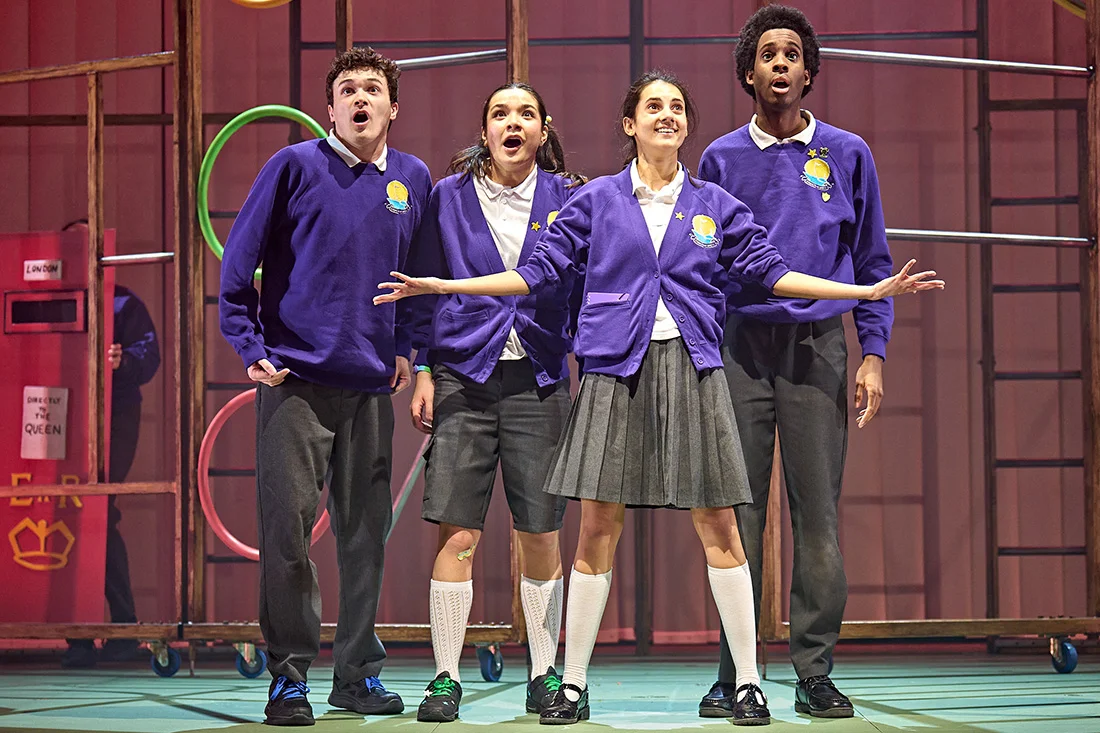
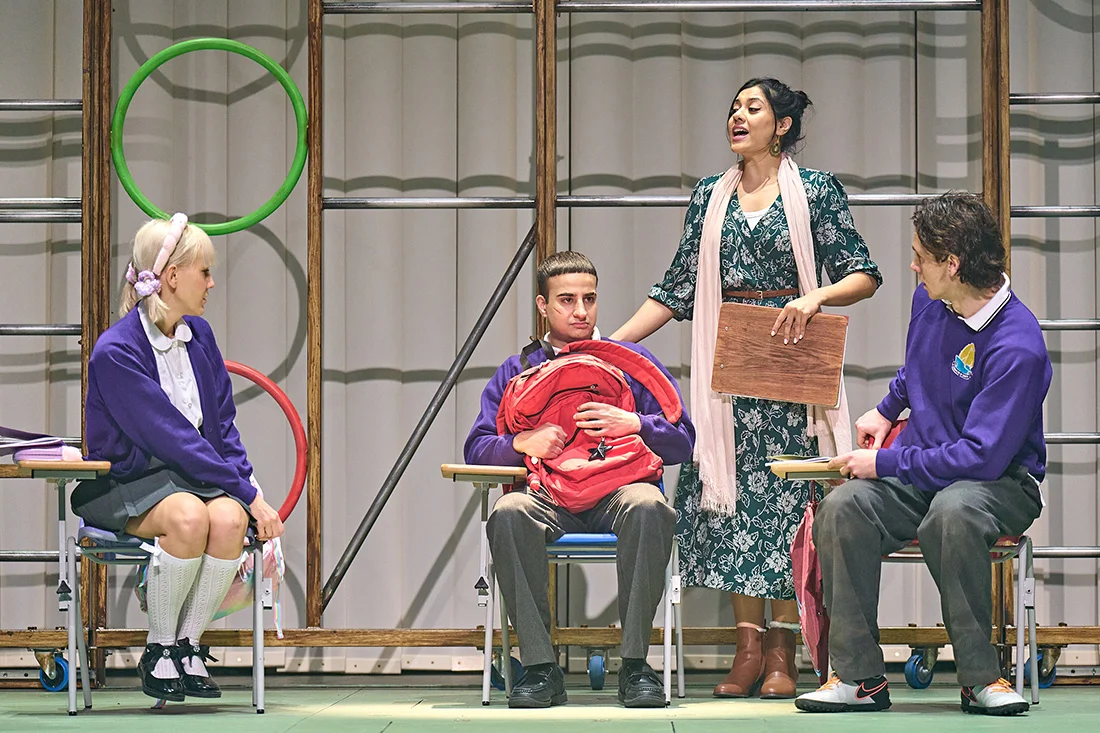
A cast of just 10 talented actors take on the roles of a group of school friends, their teachers, parents and a few members of the community.
At just 9 years old and not yet in ‘double digits’, their innocence is cemented early on, when they each go home to ask their parents what does the word refugee mean?
Alexa is played by Sasha Desouza Willock. She perfectly embodies the determination and positivity of a young girl ready to take on the world.
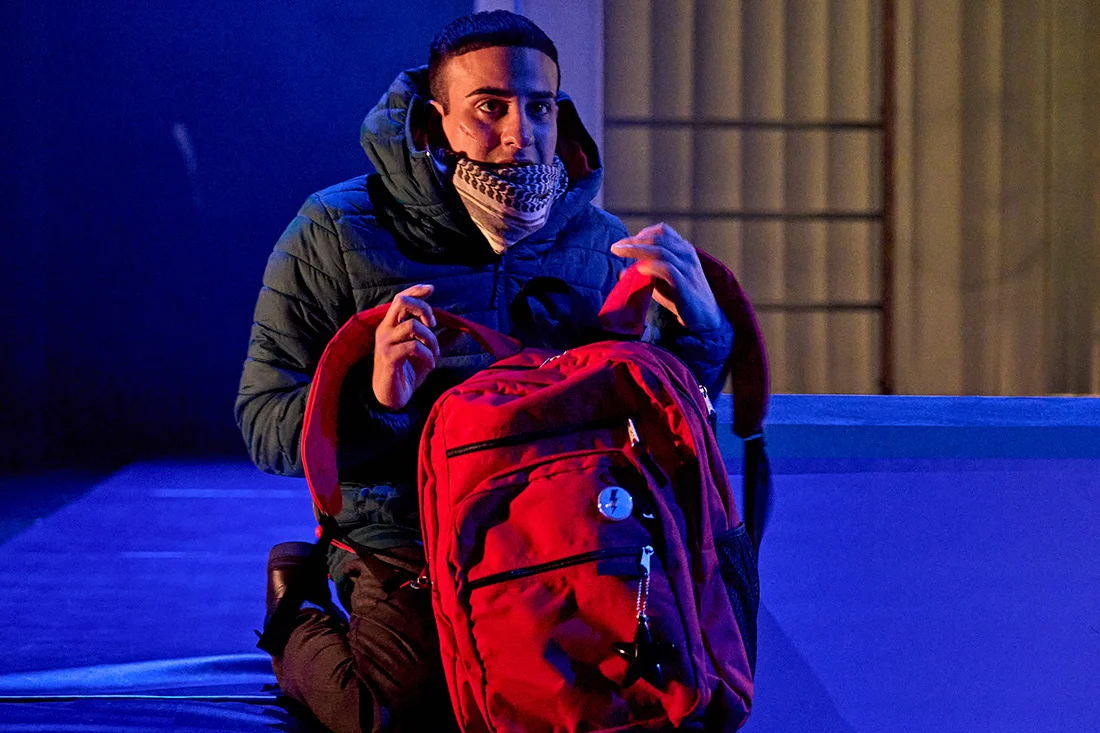
Ahmet is played by Farshid Rokey. He captivates the audience without the use of language. He doesn’t speak for the first act, but his facial expressions and body language reflect the trauma he has been through, flinching at the kind hand of his teacher upon his shoulder.
Unable to speak or understand English, confusion and anger is etched on his young face. He shouts in Kurdish when frustrated and fearful. He is in a strange place without his family and unable to communicate with other children or his teachers.
Having seen and been through things that no child should ever experience, Farshid perfectly portrays an innocent child forced to grow up, but once in the UK, he is verbally abused by adults, bullied and called a ‘filthy refugee kid’.
Understanding that Ahmet is lonely, the children focus on making him feel welcome. Sharing sweets and playing football are really powerful moments in the play, showing that children don’t need to be able to speak the same language to connect.
Clever lighting and timed kicks worked brilliantly to bring the game to life, even with an invisible ball.
As the first act ends Ahmet finds his voice and says ‘This is my story’.
The children are told not to ask Ahmet too many questions, but in the second act, he provides a snippet of what he has endured.
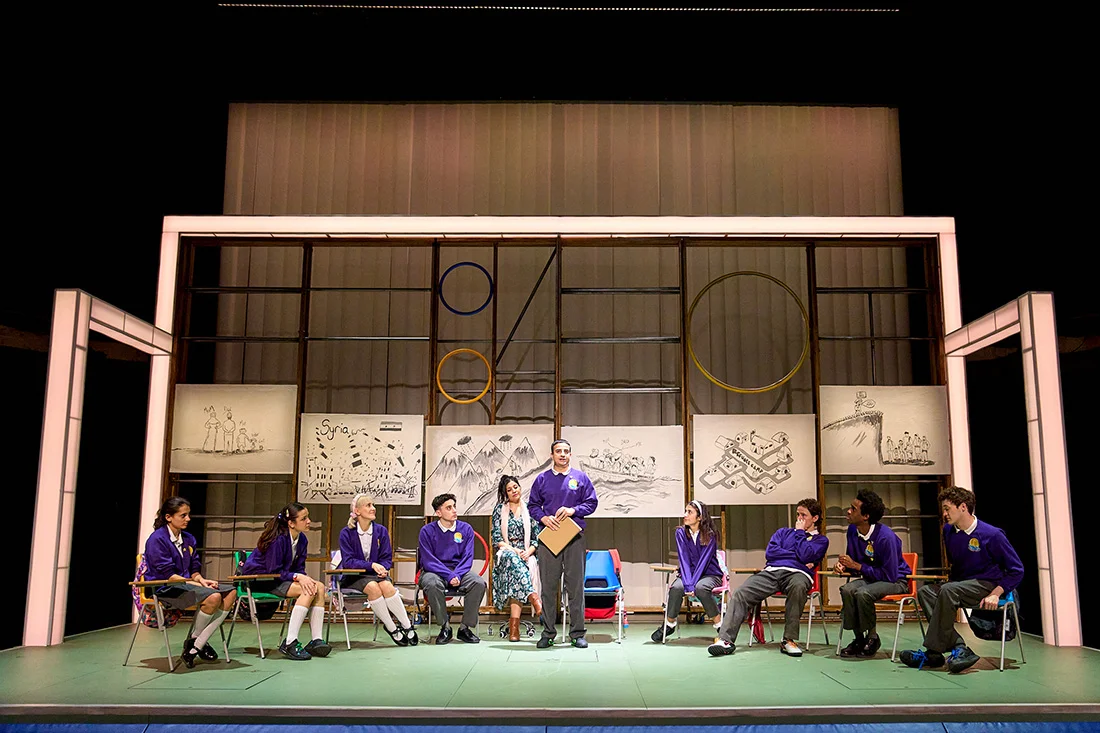
Using simple drawings, he tries to explain to the class how the bombs fell on his home and they walked for days, trying to find safety.
The play is charged with gut-wrenching emotion throughout, but for me, the line ‘My sister is in the sea’ was the most upsetting moment of the play.
A gasp rippled through the audience, as we realised through his broken English, that Ahmet’s sister had died trying to reach the safety of the UK.
The sheer horror of what Ahmet has been through was captured in one single line.
Factually, we knew early on that he had been separated from his parents, unsure where they were or if they were still alive, but listening to a child retelling his journey was very difficult to watch.
You would think that a play about a child refugee fleeing his war torn home and losing his parents and sister, would not give way for too many funny moments, but you would be wrong.
The play has genuine laugh out loud moments too, making the audience cry and laugh in equal measure.
Alongside the difficult themes of immigration, death, war, racism and bullying, there are some wonderful moments, bringing light relief to my tear filled eyes.
Alongside the plot and characters, the set and staging is simplistic, yet so very effective.
Set mainly in a class room, with climbing bars and gym apparatus, the cast use small props to move the storyline into Alexa’s living room, supermarket, bus stop, tube lines and even Buckingham Palace.
The play doesn’t need fancy scenery, the power is in the dialogue, whilst the use of clever lighting transports the children on to the bus, tube and taxi.
Basic props help to carry the story from place to place, a laundry basket and lampshade, a fruit and veg stall or just a bus stop sign.
However most powerful prop is the rippling blue sheet, portraying the dangerous sea in which Ahmet crossed, desperate for safety on the shores of Britain.
Overall, the play is relatable to an audience of all ages and is a very special piece of work, in text and on stage. It is more relevant today than ever before.
It is an uplifting story with such a simple, but important message – just be kind.
The play is a lesson in humanity for adults and a reminder to children that being kind is the most powerful super power to have.
The play is genuinely moving and regardless of your views on immigration, this play is a stark reminder of what millions of innocent children are going through right now.
The play successfully humanises a group of people that have been vilified by the media.
A timely reminder that there are humans behind the headlines, children in the boats and they have nowhere to ‘go back’ to, because their homes have been destroyed.
The play has a somewhat happy ending, with news that his parents have been located and we are told that his mother is a journalist and his father an engineer.
After the show, I tuck my little boy in to bed – at 7 he is not much younger than Ahmet.
I tiptoe in to check on my 4-year-old daughter, sleeping soundly and head downstairs, where I spot our cat, blissfully asleep on the sofa.
I’m also a journalist, a mother and wife, with a son, daughter and cat. The similarities to Ahmet’s family are not lost on me.
There but for the grace of God go I.
The play is a poignant reminder that it could so easily be us instead, if not for the luck of where in the world we were born.
We are all human and every child deserves a safe place to call home.
Production Gallery

Sensory Strategies & Parent Insights
- This is a powerful and important play for families, adapted from the much-loved book. It’s a fantastic choice for starting conversations about kindness and empathy with primary-school-aged children (especially Key Stage 2).
- Running Time: Approx. 2 hours (including an interval). This is a fairly standard length for a play. The interval is a welcome break for a leg stretch and to process the first half of the story.
- Pacing: This is a story-driven play, not a high-energy musical. The pace is steadier, focusing on dialogue, mystery, and character. It’s brilliant for children who love getting lost in a good story, but it does require a longer attention span than a big song-and-dance show.
- Themes & Tone: The show is full of heart, friendship, and humour, but it sensitively tackles serious themes, including the refugee experience and bullying. Be prepared for some genuinely sad and emotional moments—it’s a story designed to make you think and feel. (I'd recommend packing tissues!)
- Sensory Considerations: This isn't a show packed with roars or explosions. However, you can expect sounds like school bells and potentially some raised voices or shouting during scenes of conflict or bullying. The main consideration here is emotional intensity rather than loud, sudden noises. For children who are highly empathetic or sensitive to injustice, it might be helpful to chat beforehand about how the story is about helping a new friend who is sad and scared.